The United Kingdom is often viewed as a bellwether for internet regulation, and if the latest proposal from the House of Lords is any indication, the forecast is stormy. In a move that manages to be both technically illiterate and terrifyingly authoritarian, a cross-party group of Peers has tabled an amendment to the Children’s Wellbeing and Schools Bill that would effectively ban VPNs for minors.
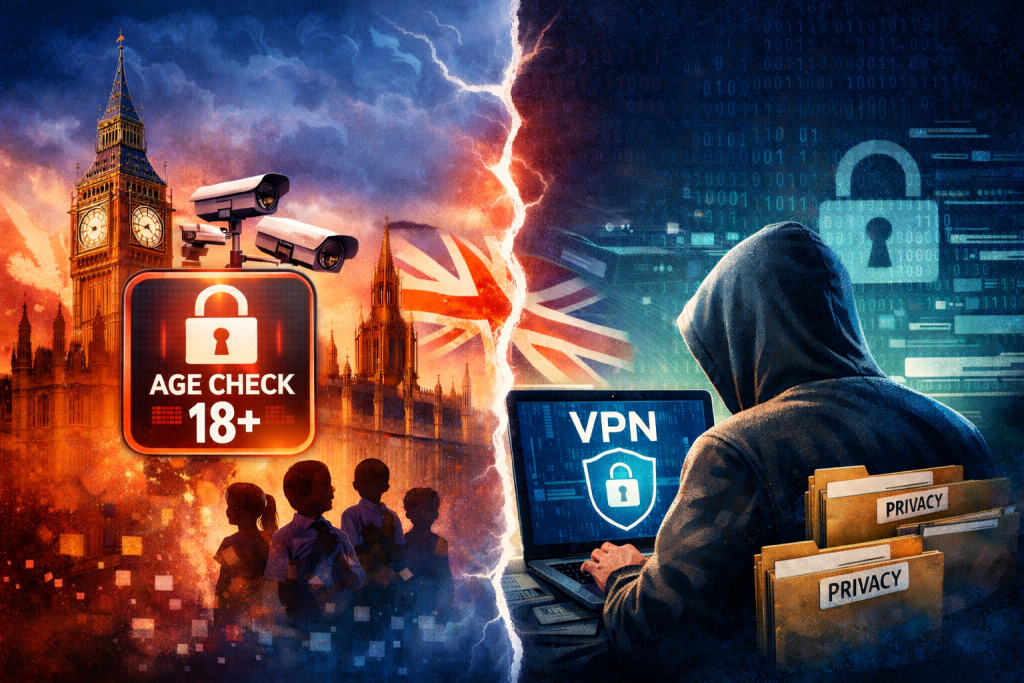
The logic—if we can call it that—is simple: the UK age verification law has tightened, but tech-savvy kids are using VPNs to sidestep the age gates. To close this loophole, the Lords want to force VPN providers to verify the age of their users.
But here lies the paradox that seems to elude the policymakers: A VPN is, by definition, a tool for online anonymity. It exists to hide who you are and where you are. The government’s solution to “safe” internet usage is to force you to upload your passport to the very tool designed to protect your privacy. It’s like requiring everyone to wear a name tag inside a voting booth. And while the bill is disguised as child protection, the subtext clearly reads: we want more control.
Is It Technically Possible to “Ban Kids”?
Let’s strip away the parliamentary jargon and look at the engineering reality. How do you implement a UK VPN ban for under-18s that will actually work? You can’t simply ask a user, “Are you a child?” and hope for honesty.
To enforce this UK age verification law, every VPN provider operating in the UK would need to implement highly effective age assurance. This means checking government-issued documents, performing facial scans, or cross-referencing credit card data. In short, to filter out the kids, you must ID the adults.
🧠 Also read: Age Verification & Digital ID: A 2025 Privacy Reality Check
If this UK ban on VPN use passes, it won’t just affect teenage UK users who avoid age checks with a VPN to access blocked sites; it will strip anonymity from the investigative journalist protecting their sources, the whistleblower communicating with regulators, and the abuse victim hiding their location.
Furthermore, the “ban” is destined to fail. The internet interprets censorship as damage and routes around it. If commercial providers are forced to gatekeep their services, users will simply switch to self-hosted protocols, decentralized networks like Tor, or obscure foreign proxies that ignore British law.
💡 Quick tip: Types of VPN Explained: How Each Works and Which Is Best for You
The only group this regulation effectively targets is the law-abiding adult user who loses their right to browse without a digital paper trail.
The Honeypot Nightmare
If you think the push for mandatory digital ID in the UK is concerning, consider the security implications of this proposal.
For a VPN to comply with this amendment, it must verify your identity. This means VPN companies—or the third-party verification services they hire—become custodians of a toxic combination of data: your verified real-world identity and, potentially, your connection logs.
Even if a provider maintains a strict no-logs policy regarding your traffic, they now hold the record that you, [name, DOB, passport number], used their service at this time.
This creates a massive honeypot for hackers. A breach at a major VPN provider wouldn’t just leak IP addresses; it would leak the verified identities of millions of security-conscious users, turning the shield into a target. And this is the exact opposite of what VPNs are built for—to protect us from profiling and tracking.
💡 Quick tip: How to Set Up a VPN at Home (Beginner-Friendly Guide)
The Nanny State vs. Infrastructure
We are witnessing the tightening of internet regulation that UK policymakers are pursuing. But we’ve seen this before: from VPN blocking to social media age verification, governments around the world are trying to assert more control over the web, attempting to shift parental responsibility onto global internet infrastructure. And this new UK age verification law proposal is no different.
The UK Online Safety Act age verification rules already forced adult sites to card users. Now, finding that measures of online age verification in the UK are easily bypassed (surprise, surprise), the state is coming for the bypass tools themselves. This is a game of whack-a-mole where the mallet is a sledgehammer, and the mole is your privacy.
🧠 Also read: Is VPN Legal in Denmark? Why the Government’s Sudden U-Turn Isn’t the End of the Story
The chilling effect is real. Imagine if the UK VPN ban plans for 2025 go through, and the UK digital ID mandatory use for VPNs becomes a grim reality. Do you still research sensitive medical conditions? Do you still read controversial political forums? Let’s just leave these questions hanging.
So how does anonymity affect behavior online? It allows for freedom of inquiry. Removing it creates a panopticon where you are free to look, provided you don’t mind the government—and whoever hacks them—knowing exactly what you’re looking at.
🧠 Also read: Digital ID and VPNs: How Privacy Fears Reshape Online Behavior
FAQs
How would UK VPN age verification actually work?
If the amendment passes, VPNs would likely use third-party services for online age verification in the UK. You would have to scan a face, upload an ID, or use a UK digital ID app before the VPN connection is established.
Can’t I just use a VPN based outside the UK?
Technically, yes. However, the proposal suggests blocking payments or access to VPN sites that do not comply. While you can sideload apps, the average user will be blocked.
Does a VPN get around UK age verification?
Currently, yes. A VPN allows you to spoof your location to a country without age gates. This is exactly why the House of Lords is targeting them.
What data do age verification systems keep?
It varies. Some use zero-knowledge proofs that only signal “Yes, over 18.” Others store metadata. The risk is that the link between your ID and your VPN usage becomes a permanent record.
Will the UK ban VPN usage entirely?
Unlikely, as businesses rely on it. But they are banning anonymous consumer VPNs for minors, which necessitates de-anonymizing everyone else.