The internet loves a free lunch. But when we speak about online privacy, a free lunch usually means you are the one on the menu.
We have all been at that crossroads: you need to bypass a geoblock or hide your browsing history, and you see two doors. Door A asks for your credit card and a monthly commitment. Door B is wide open, promising the same protection for exactly zero dollars. At that moment, you probably aren’t thinking about the risks of a free VPN, but rather wondering, “Why pay for something I can get for free?”
But are free VPNs safe? Here is the cold shower reality check: running a global network of encrypted servers isn’t free. It costs a fortune in hardware, maintenance, and bandwidth. And if a company isn’t charging you a subscription fee, how do you think they keep the lights on? They aren’t running a charity. They are running a data farm.
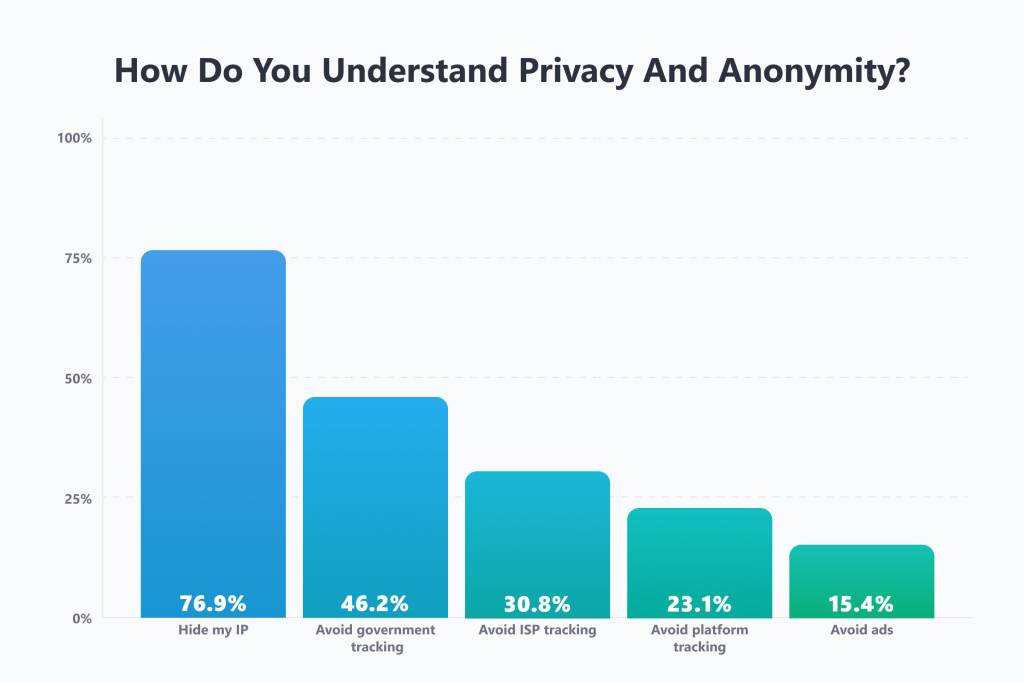
In our recent survey, we asked our readers what they use a VPN for and found a paradox in their approach to online safety. 23.5% of respondents cited “privacy and anonymity” as their top priority, with a massive 76.9% explicitly wanting to hide their IP address and 30.8% trying to stop ISP tracking.
💡 Quick tip: What a VPN Can and Can’t Protect You From in 2026
But here is the irony: if you rely heavily on a random free app to achieve these goals, you are fleeing the surveillance of your ISP only to run straight into the arms of a data broker who is far less regulated and far more desperate for profit.
You wouldn’t hire a burglar to guard your house, right? Sure, he’s watching the door, but he’s also selling your furniture out the back window. The same goes for using a free VPN to stop spying.
In this deep dive, we are going to scratch off that “free” label to uncover the true cost of these services. We will explore how safe free VPNs really are (spoiler: rarely), the specific risks of using a free VPN, and which few freemium unicorns actually deserve a place on your hard drive.
🧠 Also read: Free vs. Paid VPNs: What’s the Real Difference in 2026?
How Free VPNs Make Money
When a developer releases a “100% Free Unlimited VPN” on the App Store, they need to monetize it immediately to cover server costs. Since they aren’t getting cash from your wallet, they have to extract value from your device. So, does a free VPN sell your data? Almost always, the answer is a resounding “Yes.”
Here are the three most common—and dangerous—business models.
Data auctioning
The most common free VPN privacy risk is straightforward data trafficking. A free VPN sits in a privileged position on your device. It sees everything: every website you visit, every app you open, your location, and your device ID.
Instead of encrypting this data and flushing it (as a paid VPN would), free VPNs often collect it, package it into user profiles, and sell it to third-party advertisers. You installed the VPN to avoid ISP throttling and tracking, but you simply swapped one stalker for another. The difference? Your ISP is regulated by federal law. That random VPN selling data that’s registered in a shell company in the Seychelles? Not so much.
🧠 Also read: Your AI Therapist Is Being Wiretapped: The Urban VPN Scandal
SDK injection and ad tracking
Have you ever downloaded a free utility app, only to have your phone battery start draining twice as fast? The reason could be malicious software development kits (SDKs).
Many free VPN security risks stem from these third-party code libraries. VPN developers integrate these SDKs to serve ads. But these aren’t just banner ads. They are active trackers that can scrape your contact lists, read your messages, and even hijack your screen. In 2026, these trackers are sophisticated enough to fingerprint your identity even if you never log in.
🧠 Also read: VPN Privacy: Are You Really Anonymous?
The “Hola” model: You are the server
This is the darkest closet in the free VPN mansion. Some services (most infamously Hola VPN in the past) operate a peer-to-peer (P2P) network. When you turn the VPN on to watch Japanese Netflix, you aren’t connecting to a secure server in Tokyo. You are routing your traffic through the device of another user in Tokyo.
Sounds clever? Here is the catch: other people are routing their traffic through YOU.
Your device becomes an exit node for the network. If a hacker uses the network to launch a DDoS attack or download illegal child abuse material, the traffic looks like it is coming from your IP address. The police don’t knock on the VPN’s door; they knock on yours. And that’s where free VPN legal risks—like unwittingly becoming an accomplice to a cybercrime—get real.
The Risks of a Free VPN
It’s not just about shady business practices. The technical architecture of many free VPNs is often held together by duct tape and bad intentions. So, what are the risks of using a free VPN?
The “some-logs” policy
We talk a lot about zero-log policies, but with free VPNs, logging is a feature, not a bug. Here’s what they most likely know about you:
- Connection logs: They track when you connect, for how long, and how much data you transfer.
- Usage logs: This is the deal-breaker. They record the websites you visit, the files you download, and the apps you use.
In case of a legal request or a data breach, this information links your online activity directly to your real identity. Unlike paid providers like Proton or NordVPN, which have undergone third-party audits to prove they can’t hand over data, free VPN logging risks are real. If the servers are seized, your history is an open book.
Encryption? What encryption?
You assume that a VPN equals encryption. You’d be wrong. A shocking number of free VPNs utilize outdated protocols like PPTP (which was cracked by the NSA decades ago) or, worse, don’t encrypt your traffic at all. They act as simple proxy servers that reroute traffic without wrapping it in a secure tunnel.
The consequence? You are browsing with a false sense of security. Your ISP can still see your traffic, and any hacker on the same public Wi-Fi network can sniff your passwords.
🧠 Also read: Is Big Brother Watching? The Truth About VPN Effectiveness Against Government Surveillance in 2026
The leak factor
A VPN is supposed to be a watertight tunnel. Free VPNs are often Swiss cheese. They might tunnel your IPv4 traffic but let your IPv6 traffic bypass the VPN entirely.
You may think you are safely browsing in London, but a simple WebRTC leak test reveals your real IP address in Chicago. If you are a dissident in a restrictive regime, this “glitch” could land you in jail.
The Android malware playground
The Google Play Store is a minefield. A seminal study by CSIRO (Commonwealth Scientific and Industrial Research Organisation) analyzed 283 Android VPN apps and found that 38% contained malware or malvertising. Furthermore, 84% leaked user traffic, and 18% didn’t encrypt traffic at all. At that point, the answer to “Are free VPNs safe?” becomes rhetorical.
And these aren’t obscure apps; many had millions of downloads. They request permissions they don’t need—access to your camera, microphone, and GPS—and turn your phone into a pocket spy for who knows what purpose.
Safer Alternatives: You Don’t Always Have to Pay
So, are there any safe free VPNs? Or is the entire ecosystem a scam?
The good news is that “safe” and “free” can coexist, but you have to pick the right tool for the job. And sometimes you don’t even need a full-blown VPN.
Tor Browser: For whistleblowing & extreme privacy
The Onion Router (Tor) is the closest thing to digital invisibility. It bounces your traffic through three random volunteer nodes (servers) around the world. Layer 1 knows who you are but not where you are going. Layer 2 knows nothing. Layer 3 knows where you are going but not who you are.
👍 The good: It is free, open-source, and offers anonymity that is arguably superior to even the best paid VPNs because no single entity controls the network.
👎 The bad: It is painfully slow. Because your data is taking the scenic route around the globe, you can forget about streaming 4K video or gaming. Also, while your ISP can’t see what you are doing, they can see that you are using Tor, which might flag you for surveillance in some countries.
👉 Best for: Journalists, activists, and anyone needing to access the dark web or bypass severe censorship.
💸 Cost: $0.
🧠 Also read: Tor Enters the VPN Arena: The Tor Project Launches Its Own Beta Android VPN
Free proxies: For bypassing simple web blocks
A proxy is a simple intermediary. You ask the proxy to go to a website and show you the result. It acts like a courier.
👍 The good: It masks your IP address from the website you are visiting. It’s fast, free, and requires no installation—you just use a browser extension or a website.
👎 The bad: Zero encryption. This is the critical flaw. A proxy hides you from the destination website, but it does not hide you from your ISP or the hacker on your Wi-Fi network. Your data travels naked. Furthermore, the proxy owner can see everything you do.
👉 Best for: Bypassing a low-level block (like a school or office firewall) to read a text-based article. Never, ever use this for banking or logging into social media.
💸 Cost: $0 (usually).
🧠 Also read: VPN Blocking: Where, Why, and How VPNs Get Blocked—And What You Can Do About It
Freemium VPNs: For general security
These are stripped-down versions of premium products—the only category of zero-cost services that mitigate the free VPN safety risks described above. They don’t sell your data because their business model relies on upgrading you to a paid plan.
👍 The good: Legitimate free VPNs that are safe to use.
👎 The bad: You pay with convenience. Their business model is to annoy you into upgrading. They want you to hit the data cap. They want you to get frustrated by the lack of server choices. They treat the free version as a marketing demo.
👉 Best for: General security on public Wi-Fi, casual browsing, and testing the waters before buying.
💸 Cost: $0.
🧠 Also read: How to Choose the Best VPN for Your Device
Here are the top free options:
1. Proton VPN Free
2. Windscribe Free
3. PrivadoVPN Free
4. TunnelBear Free
5. Hide.me Free
6. Hotspot Shield Basic
🧠 Also read: Best Free VPNs in 2025: Top Secure & Reliable No-Cost Options
Which tool fits your needs?
| Tool | Security | Privacy | Speed | Best for |
|---|---|---|---|---|
| Tor Browser | 🟢 Maximum | 🟢 Total (no central logs) | 🔴 Very slow | Extreme anonymity & whistleblowing |
| Web proxy | 🔴 None (no encryption) | 🔴 Low (owner sees all) | 🟢 Fast | Bypassing a simple school/work block |
| Freemium VPN | 🟢 High | 🟢 High | 🟡 Medium (or capped) | Public Wi-Fi protection & casual browsing |
| Paid VPN | 🟢 Maximum | 🟢 High | 🟢 Very fast | Everything (streaming, gaming, P2P) |
| Typical free VPN | 🔴 Risky | 🔴 Zero (often sells data) | 🟡 Medium to fast | Getting hacked |
When to Open Your Wallet
If you are just trying to read a news site that is blocked in your office, a free proxy or Tor is fine. But if you are looking for a digital lifestyle upgrade and plan to avoid all these free VPN limitations and risks, you are going to have to pay. Here is why the free tools fall apart in the real world.
Streaming
Streaming services are currently locked in an arms race with VPN providers. Netflix, Disney+, and BBC iPlayer have sophisticated detection systems that ban thousands of VPN IP addresses every single day.
Free VPNs often have a small, well-known pool of IP addresses. Netflix flagged and banned these years ago. You will see the dreaded “Proxy Detected” error 99% of the time. Even if you find a free server that works, the data caps mean you’ll be cut off halfway through your movie.
Premium VPNs offer clean, dedicated IPs and increasingly residential IPs that look like normal home connections. Plus, they constantly refresh their server pools to stay one step ahead of the ban hammer.
Torrenting and P2P
When you torrent, you are connecting your computer to a swarm of thousands of strangers, and every single one of them can see your IP address.
Most free VPNs block P2P traffic entirely because it eats up their bandwidth. The ones that do allow it are often “honeypots” or lack a kill switch, meaning that if your VPN connection drops for even one second (which happens often on overloaded free servers), your real IP is broadcast to the swarm—and to the copyright trolls monitoring it.
With a paid VPN, you usually get dedicated P2P servers optimized for speed, SOCKS5 proxies, and a system-level kill switch that cuts your internet instantly if the VPN fails, ensuring you never leak a single byte.
🧠 Also read: The State of Torrenting in 2026: Why the “Dead” Protocol Is More Alive Than Ever
Gaming
Routing your connection through a free server that is also being used by 10,000 other people results in massive ping (latency). In a shooter or MOBA, you will be dead before you even see the enemy.
Premium VPNs invest in high-performance infrastructure. In some cases, a paid VPN can actually lower your ping by routing your traffic more directly to the game server than your ISP does.
Bypassing state censorship (China, Russia, Iran)
Governments often use deep packet inspection (DPI) to identify VPN protocols. Standard OpenVPN or WireGuard traffic sticks out like a sore thumb. Free VPNs rarely have the budget to develop obfuscation technology.
At the same time, top-tier VPNs use proprietary “stealth” protocols that wrap your VPN traffic in an extra layer of encryption, making it look like regular HTTPS web browsing. This allows you to slip through firewalls undetected.
🧠 Also read: The Great Firewall of Pakistan: How It Is Hunting Down Your VPN
The Verdict: Are Free VPNs Safe?
We are living in an era where data is the new oil, and your digital footprint is the drill site. The rise of digital ID and age verification laws, alongside aggressive state surveillance, means that anonymity is no longer a default state—it is a luxury product, which a free VPN selling your data definitely isn’t.
If you are using a random free VPN, you aren’t fighting the system; you are actually feeding it. You are effectively accepting the free VPN security risks that can lead to all sorts of troubles—from identity theft to legal liability—all to save the price of a cup of coffee.
💡 Quick tip: The $5 Question: Are Paid VPNs Worth It in 2026?
Our data shows that 64.7% of you use a VPN daily. That is a massive amount of trust to place in an application. So, what free VPNs are safe, and how do you choose one? Only settle for the ones that annoy you with data caps and “Upgrade Now” buttons. For everything else—for true peace of mind—you have to pay. Because when it comes to VPNs, like I’ve said many times before, if you aren’t the customer, you are the merchandise.
🧠 Also read: Digital ID and VPNs: How Privacy Fears Reshape Online Behavior
FAQs
How safe are free VPNs really?
Most are not safe. A CSIRO study found that 38% of free Android VPNs contained malware and 84% leaked user traffic. While reputable freemium versions (like Proton or Windscribe) are secure, the vast majority of “totally free” VPNs on app stores monetize by selling your data or injecting ads.
What are the risks of using a free VPN for banking?
The biggest risk is a man-in-the-middle attack. If the free VPN has weak encryption (or none at all), the provider or a hacker can intercept your session tokens and passwords. Never use a generic free VPN for financial transactions; use a verified paid VPN or your mobile data connection.
Are there any safe free VPNs for iPhone?
Yes, but the list is short. Safe free VPNs for iPhone include the free tiers of Proton VPN, Windscribe, TunnelBear, Hide.me, PrivadoVPN, and Hotspot Shield. Apple’s App Store is generally safer than Google Play, but “fleeceware” apps (useless apps with high subscription fees) and data-harvesting free VPNs still exist.
Free VPNs that are safe: Do they exist?
Yes, but think of them as demos. Free VPNs that are safe include Proton VPN, Windscribe, TunnelBear, Hide.me, PrivadoVPN, and Hotspot Shield. These are loss leaders for legitimate security companies. If a VPN is free, unlimited, and has no paid tier, run away.
What is the best free VPN that doesn’t sell data?
Proton VPN is widely considered the gold standard for a free VPN that doesn’t sell data. It is open-source, based in Switzerland, and externally audited. However, you pay with convenience: you cannot select specific servers, and speeds can be inconsistent during peak hours.