We’ve all heard the sales pitch: “Buy a VPN to watch Netflix Japan” or “Get cheaper flights by changing your IP.” It’s light, it’s fun, and it’s a great way to save a few bucks. But if you dig a little deeper, the conversation shifts from saving money to saving your skin. In our recent survey, a staggering 46.2% of VPN users who cited privacy and anonymity as their primary goal specifically flagged avoiding government tracking—ranking it significantly higher than avoiding ISP (30.8%) or platform (23.1%) tracking.
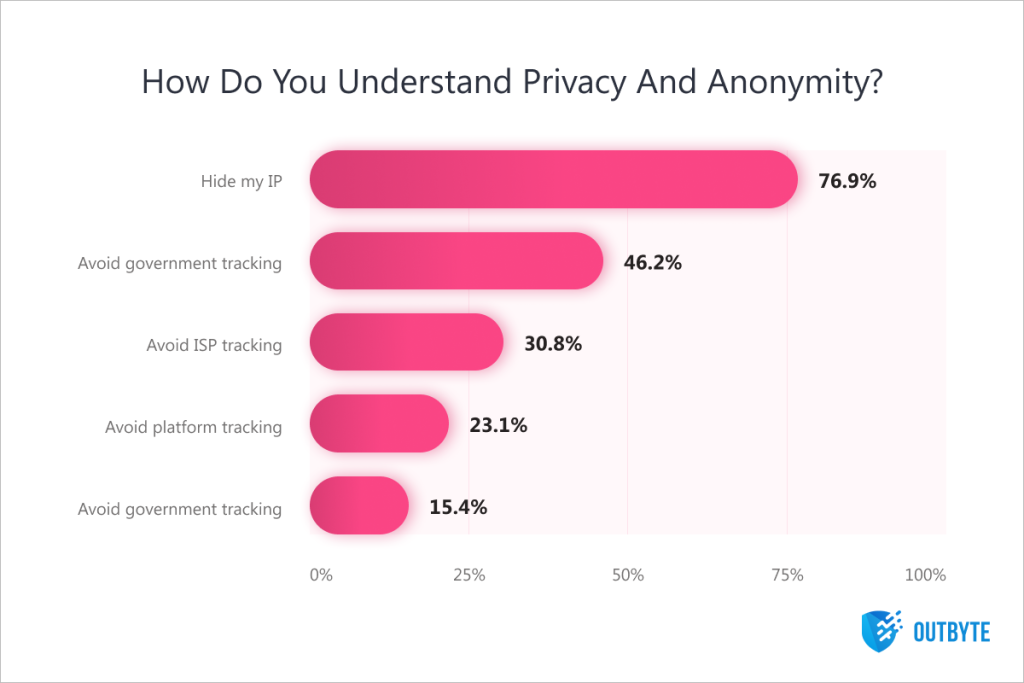
Let that sink in. Nearly half of the people using VPNs for privacy aren’t just hiding from a creepy advertiser who wants to sell them shoes; they are hiding from government online surveillance. And they are right to be worried. The modern internet isn’t a cloud. It’s a wiretap waiting to happen. But what about VPN effectiveness against government surveillance? Can a VPN really stand up to it?
This is an open-ended question, but one thing is clear: whether you’re a journalist in a restrictive regime or just a citizen in a “free” country watching digital ID laws tighten around your neck, the threat model has changed. It’s no longer just about privacy. It’s about autonomy. And to fight back against government surveillance, VPN solutions need to adapt.
🧠 Also read: Digital ID and VPNs: How Privacy Fears Reshape Online Behavior
The “Eyes” Have It: Understanding Five, Nine, and Fourteen Eyes Intelligence Alliances
If you think the internet has borders, you’re looking at the wrong map. In the world of signals intelligence (SIGINT), national borders are less like walls and more like open doors for friends. This is where the Fourteen Eyes alliance comes in—a global surveillance network that makes Orwell’s 1984 look like a rough draft.
It started with the Five Eyes alliance (USA, UK, Canada, Australia, and New Zealand) post-WWII, a pact to share intelligence so seamless that it effectively created a single global spying entity. If the NSA (USA) wants to spy on a U.S. citizen but is blocked by domestic laws, they can simply ask the GCHQ (UK) to do it for them and share the results. It’s a legal loophole the size of the Atlantic Ocean.
The network expanded to the Nine Eyes alliance (adding Denmark, France, the Netherlands, and Norway) and eventually the Fourteen Eyes (adding Germany, Belgium, Italy, Spain, and Sweden).
🧠 Also read: EU Digital ID and Age Verification: What Europeans Should Expect in 2025–26
Why does this matter for your VPN?
Jurisdiction is everything. If you use a VPN based, for example, in the USA (a Five Eyes member), they are subject to U.S. subpoenas, National Security Letters (NSLs), and gag orders. A VPN based in Panama or the British Virgin Islands operates outside this immediate jurisdiction. While international pressure exists everywhere, VPNs from countries outside the Fourteen Eyes can’t be compelled by a U.S. court order in the same instant, terrifying way a New York-based one can. So when you pick a VPN, you aren’t just picking a server; you’re picking a legal system.
💡 Quick tip: How to Choose the Best VPN for Your Device
How Does Government Surveillance Work (And Can a VPN Actually Help)?
So what is government surveillance in the digital age? Forget the Hollywood image of a guy in a van listening to your phone calls. Modern surveillance is algorithmic, automated, and boringly efficient.
Deep packet inspection (DPI)
Imagine the internet is a postal service. In a normal setup, the mailman (your ISP) looks at the address on the envelope to know where to deliver it, but they don’t open the envelope. With DPI, the mailman doesn’t just look at the address. They steam open the envelope, read the letter, check the photos you included, and then seal it back up.
- How it works: DPI boxes are hardware installed at the ISP level. They analyze the actual “payload” of your data packets. They can see if you are watching a video, sending an email, or downloading a file. In restrictive regimes, if the DPI spots a specific keyword (like a political slogan) or a forbidden protocol, it instantly drops the connection.
- The VPN fix: A VPN places your letter inside a transparent lockbox and swallows the key, so the ISP can still see the letter inside and the delivery address (the VPN server), but they have absolutely no way to see what is inside. To a DPI box, your sensitive request to a whistleblower site looks like an indistinguishable stream of gibberish.
🧠 Also read: ISP Throttling: Do VPNs Help Streaming?
Metadata retention
“Metadata tells you everything,” as former NSA General Counsel Stewart Baker once said. This is the most dangerous form of surveillance because it’s the easiest to collect legally. Even if the government can’t read your messages (because they are encrypted), they can build a perfect map of your life using metadata.
- How it works: Every time you visit a website, your device initiates a handshake. Even before you see the page, your ISP logs:
- The destination: “User X visited health-advice-for-sensitive-condition.com.”
- The timestamp: “They visited at 2:03 AM.”
- The duration: “They stayed for 45 minutes.”
- The device: “They used an iPhone 15.”
- The location: “They connected from the cell tower on Main St.”
- The volume: “They uploaded 500 MB of data” (implying a file transfer rather than just reading).
- How the government gets it: In many countries (including the UK, Australia, and parts of the EU), laws require ISPs to store this data for up to two years. The police do not need a warrant to “hack” you. They just log into a portal provided by the ISP and download your history as an Excel spreadsheet.
- The VPN fix: A VPN mixes your traffic with thousands of other users on a single server IP. When you connect, the ISP only sees that you are talking to a VPN server. They don’t know the final destination. If 5,000 people are using the same VPN exit node, it becomes incredibly difficult to prove which specific user accessed a specific site. The metadata trail stops at the VPN’s front door.
💡 Quick tip: How to Set Up a VPN at Home (Beginner-Friendly Guide)
Can governments track VPN users?
The short answer is yes, but it’s harder. And this brings us to a critical distinction: mass surveillance vs. targeted surveillance. VPNs are excellent against mass surveillance, also called dragnet data collection (like the DPI and metadata retention described above). But they won’t help much against targeted tracking.
So what is targeted surveillance? This is when an intelligence agency has their eyes specifically on you. Here is how they can still track you, even when your VPN is on:
- Timing attacks: If the NSA monitors the network at both ends (your ISP and the VPN server’s exit point), they can correlate the timing and size of data bursts to de-anonymize you. If you send a 5.2 MB request at 12:00:01, and the VPN server sends a 5.2 MB request to a target website at 12:00:02, the math isn’t hard to do.
- Browser fingerprinting: Even with a different IP address, your browser leaks a unique combination of details—screen resolution, installed fonts, battery level, and browser version. This creates a fingerprint that trackers can use to follow you, even if you use a VPN.
- Human error: This is the most common failure point. If you turn on a VPN and then log into your Google or Facebook account, congrats, you have just voluntarily identified yourself. The platform sees, “User X is connecting from VPN IP Y.” So if the government asks the platform to share the info, your anonymity is gone.
- Device compromise: If a government agency installs malware or a keylogger on your device, they can see everything you type before it gets encrypted by the VPN.
So, can a VPN protect against government surveillance? Yes, but not always. Let’s make this clear: They don’t magically decrypt your data. They don’t see your passwords or credit card numbers. But they can de-anonymize your connection and connect the dots to prove that you are the one talking to that specific site or server. And in a court of law (or a secret tribunal), proving the connection is often enough to convict.
🧠 Also read: VPN Blocking: Where, Why, and How VPNs Get Blocked—And What You Can Do About It
The Warrant Canary: The Only Signal That Matters
In the world of gag orders, silence speaks volumes. Governments can issue secret warrants (like NSLs in the U.S.) that force a company to hand over data and legally forbid them from telling anyone about it.
So, what is a warrant canary in the VPN context? It is a regularly updated statement on a company’s website that says something like, “As of [today’s date], we have NOT received any secret government subpoenas.”
If the government serves them a secret order, the company cannot legally say, “We have been compromised.” But they can simply stop updating the canary. When the canary “dies” (stops updating), users know to flee.
Has a canary ever tripped?
Yes. In 2013, Apple’s transparency report quietly removed the line stating they had “never received an order under Section 215 of the USA Patriot Act.” That canary just stopped singing, and smart users noticed.
🧠 Also read: Why Wisconsin and Michigan Want to Ban Your VPN
Case Studies: Can Governments Subpoena VPN Providers?
Talk is cheap. Privacy policies are just text on a screen until the FBI comes knocking. So do VPN providers share data with governments? The answer relies heavily on the provider’s integrity and architecture. Let’s look at some real-life cases.
The good: ExpressVPN vs. Turkey
In 2017, Turkish authorities seized an ExpressVPN server in an attempt to investigate the assassination of the Russian ambassador. They physically raided the data center. The result? Zilch. The server contained no logs, no user data, and no useful evidence.
The bad: HideMyAss (HMA) vs. LulzSec
In 2011, a hacker from the LulzSec group used HMA to hack Sony Pictures. HMA, a UK-based company, complied with a court order and handed over connection timestamps. This case proved that a VPN in a Five Eyes jurisdiction is not a safe harbor.
🧠 Also read: What Does a VPN Hide?
The ugly: PureVPN vs. the cyberstalker
In 2017, the FBI caught a cyberstalker by correlating logs provided by PureVPN. The company had aggressively marketed a “zero-logs” policy, yet they handed over “netflow logs” (timestamps and source IPs). This case is a good reality check of how sweet marketing stories fade out when it comes to VPN logging and subpoenas from federal agencies.
Conclusion: Can a VPN Protect Against Government Surveillance?
We need to be real. A VPN is a powerful tool—it is the digital equivalent of closing your blinds. It stops the ISP from selling your data, it stops the local network admin from snooping, and it makes singling you out significantly harder and more expensive for the state.
But at the same time, don’t overestimate the VPN effectiveness against government surveillance, as it doesn’t make you invisible. A VPN protects the transport of your data, not the endpoint. If you use a VPN to log into Facebook, Facebook still knows exactly who you are. If you download malware, a VPN won’t stop it from executing.
Use a VPN because you refuse to be low-hanging fruit. Use it because privacy is a right you have to exercise to keep. But never mistake a tunnel for a bunker.
FAQs
Does a VPN stop government spying?
A VPN is highly effective against mass surveillance (dragnet data collection) and ISP snooping. However, it cannot stop targeted surveillance if an agency installs spyware on your device or uses advanced timing attacks to correlate your traffic.